
Special Pilot Awards
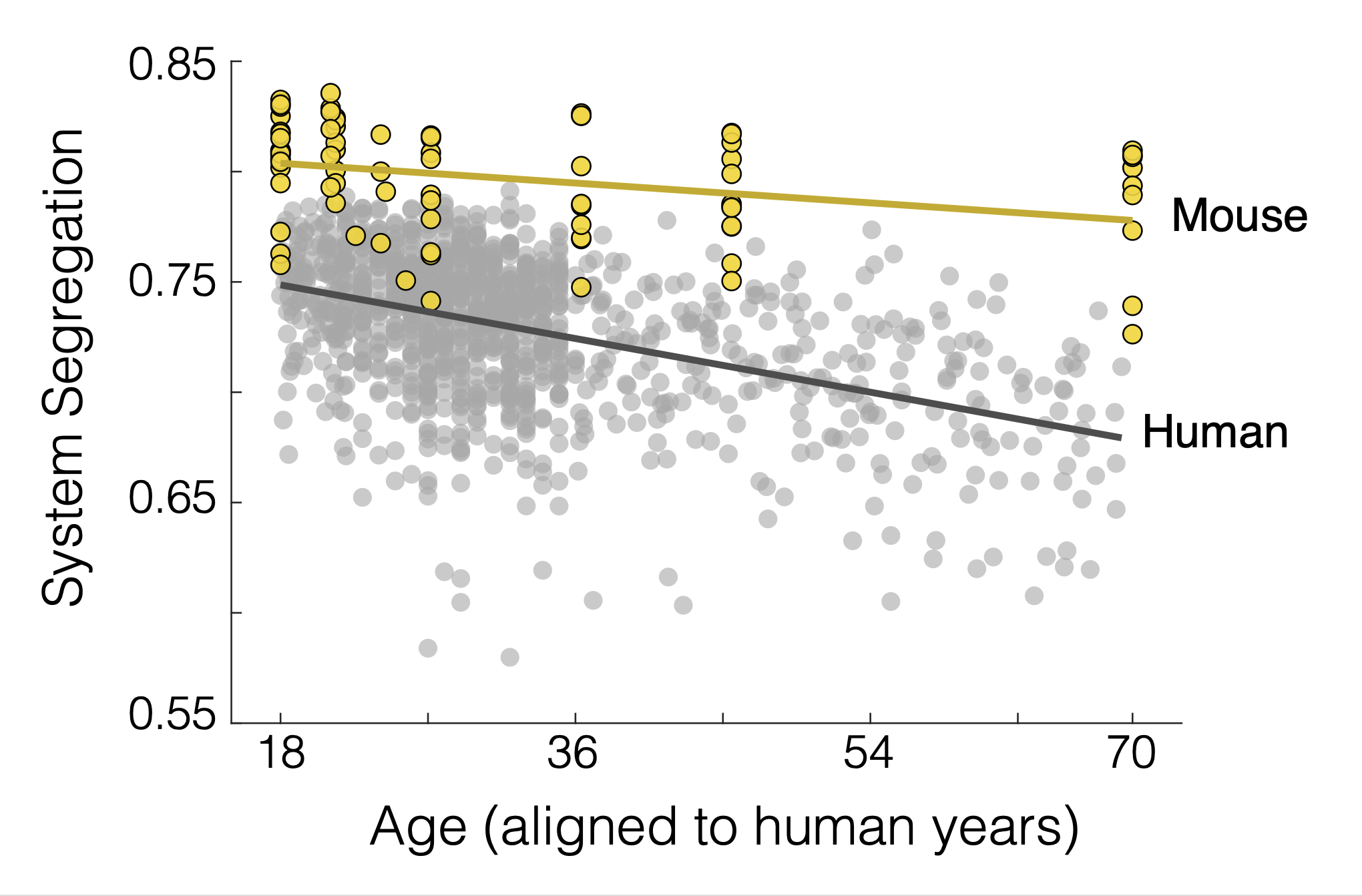
Functional Brain Network Organization as a Translational Bridge for Brain Aging in Humans and Mice
This project will develop new methods for harmonizing neuroimaging biomarkers of age-related changes in large-scale functional brain network organization within and across species. By focusing on shared systems-level brain network phenotypes, the work aims to establish common frameworks for comparing brain aging in humans and mice, facilitating the development of normative models, lifespan reference curves, and cross-species translational resources. Ultimately, these efforts will strengthen the translational bridge between human and animal research, enabling future investigations into how social determinants of health shape trajectories of brain aging across species.
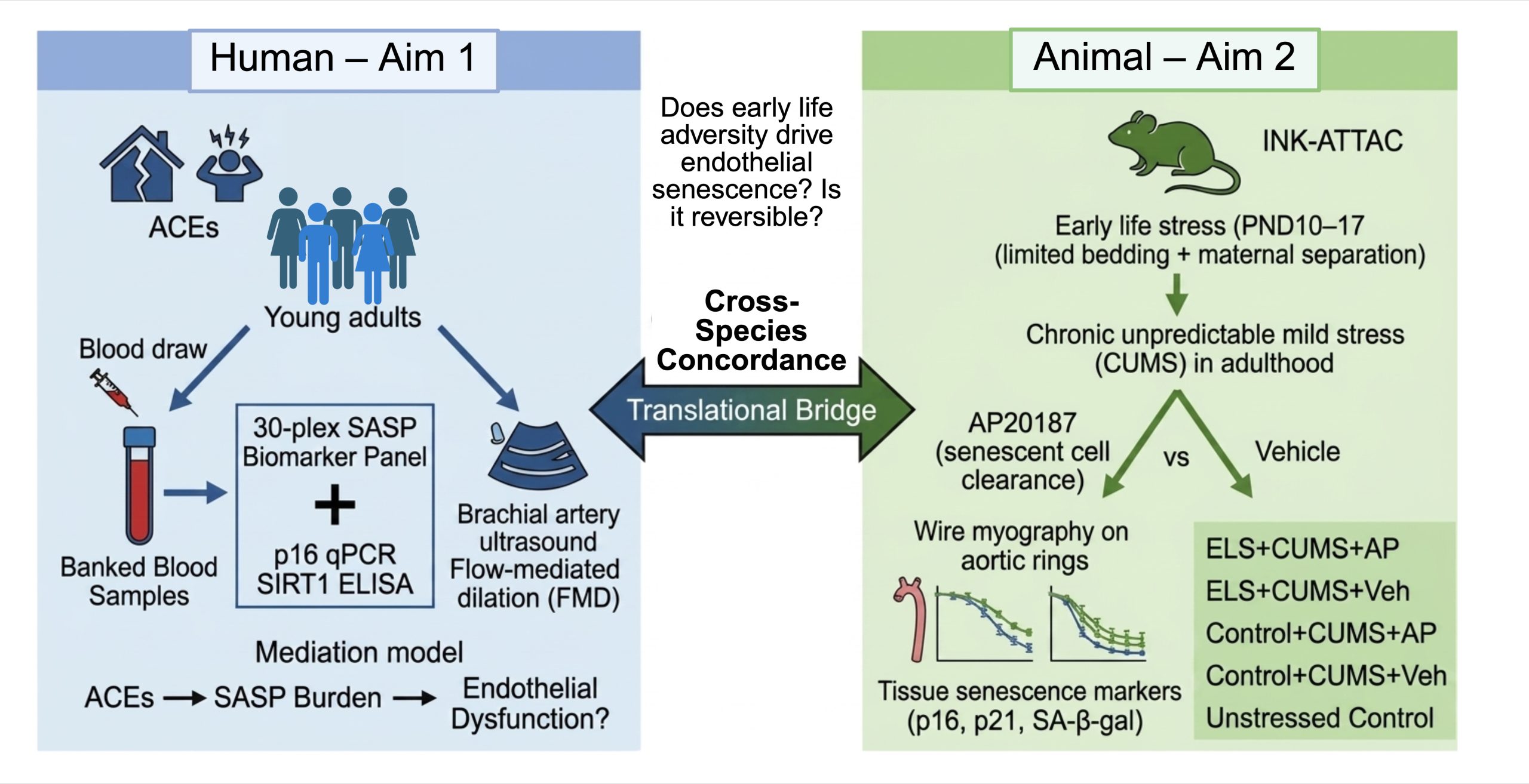
Cellular Senescence as a Mechanistic Link between Early Life Adversity and Premature Vascular Aging
Adverse childhood experiences are linked to premature cardiovascular aging, but the underlying cellular mechanisms remain unclear. This pilot study, in collaboration with Drs. Darren Baker and Bennett Childs at the Mayo Clinic Kogod Center on Aging, will pair human biomarker data from young adults with a transgenic mouse model (INK-ATTAC) to test whether early life stress drives the accumulation of senescent cells in blood vessels, and whether clearing those cells can reverse these effects.