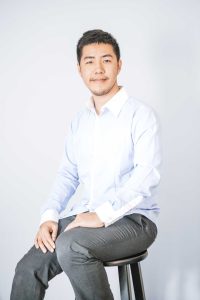
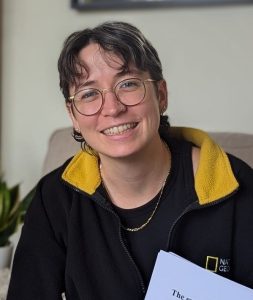
Tuan is a PhD candidate in the joint Neuroscience program of The Jackson Laboratory and Tufts University. He studies spontaneous mouse behavior from video recordings, combining computer vision, machine learning, and statistical modeling. He has applied these computational methods on mouse genetic models of neurodevelopmental disorders to quantify subtle but reproducible differences among the models. As a Bruce McEwen fellow, he will leverage multi-day behavioral recordings to characterize long-term social interaction and its association with anxiety-like behaviors and frailty. The goal is to have a more comprehensive view of the behavioral repertoire and develop a data-driven approach to connect sociability and biological aging.
Maria Razzoli, University of Minnesota
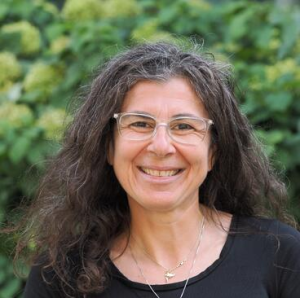
Maria is a Research Project Specialist at the University of Minnesota, Twin Cities. Her research focuses on the role of social determinants on health and aging in mouse models. These models generate behavioral, metabolic, and physical data, in addition to physiological biomarkers, epigenetic as well as omics data. With the McEwen fellowship, she will advance her statistical skills by learning methods that are applied to the Add Health study by the group led by Dr. Katheleen Mullan Harris at UNC, focusing on large human population datasets addressing social disparities and longitudinal health trajectories. She will then be able to translate those skills to rodent datasets, combining multifactorial data, informing on variable selection, making predictions, and identifying biomarkers for biological aging in response to social stress as well as to better design future experiments. In addition, this training in human models will give her the expertise to become a liaison within the Network to facilitate the discourse between labs investigating human and non-human animal subjects.
Eric Sun, Massachusetts Institute of Technology
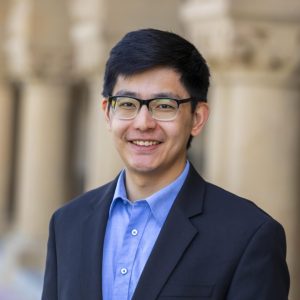
Eric Sun is an Assistant Professor of Biological Engineering at MIT and a Member of the Ragon Institute of Mass General Brigham, MIT, and Harvard, where he leads an independent research program developing computational and AI/ML models to understand and ultimately intervene in biological aging. This includes building spatially resolved and single-cell aging clocks to serve as high-resolution biomarkers of aging, developing new machine learning models to predict intervention responses, and engineering optimal solutions for controlling biological systems. As a McEwen Fellow, he will perform secondary data analysis of large-scale human population datasets to understand conserved signatures of brain aging between human and animal models.
Dantong Zhu, Institute for Systems Biology
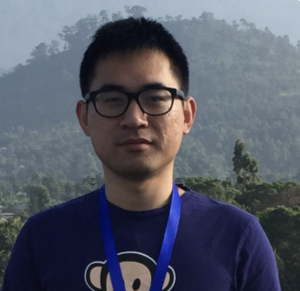
Dantong is a Research Scientist at the Institute for Systems Biology who seeks to utilize multi-omics data to understand aging and age-related diseases. His research integrates preclinical model (mice) and human population study data to investigate biomarkers and discover molecular mechanisms for aging and frailty. He used deficit accumulation-based frailty indices for the measurement of frailty, and has revealed proteomics, metabolites and DNA methylation signatures for frailty, with a focus on longitudinal data and sex dimorphism. As a McEwen Fellow, he will expand this work by examining how individual frailty index items can contribute to the trajectory of frailty in mice, under diverse diets and conditions.
2026 Travel Fellow
Jessica Foley, Tufts University
Jessica Foley is a postdoctoral researcher in the Promislow lab at Tufts University, interested in the comparative biology of ageing. Her project seeks to unpack the causal arrows linking social behavior and healthy aging in the model organism Drosophila melanogaster, leveraging this system’s optogenetic and molecular toolbox to uncover the neuronal mechanisms through which social interactions shape ageing trajectories. She is new to Drosophila, having previously worked on aging in the tropical Heliconius butterfly genus, and plans to use this Travel Fellowship to gain expertise in Drosophila techniques at the Cold Spring Harbor Laboratory Drosophila Neurobiology workshop.